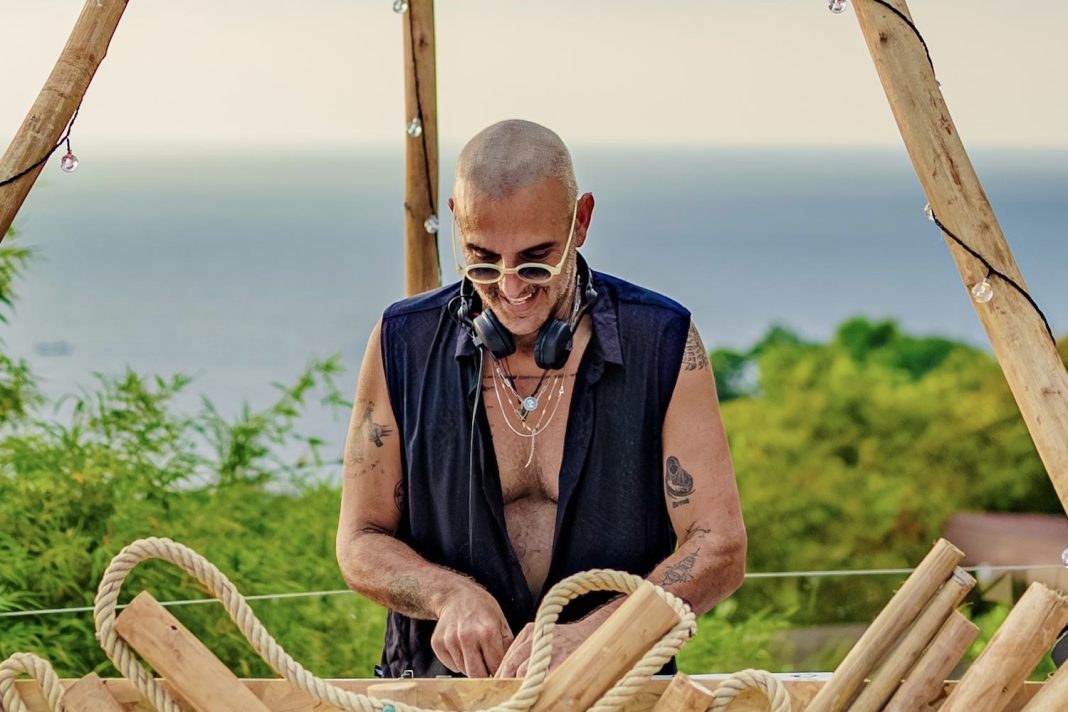
SARINNA is an artist whose sound is rooted in the driving energy of techno, the hypnotic pull of trance and the groove-led rhythms of tech house. Splitting his time between Koh Phangan and Tel Aviv, he moves between different musical cultures and dancefloor environments, bringing an adaptable yet distinctive approach to every set.
From high-energy trance sessions in Israel to the more laid-back, groove-focused atmosphere of Koh Phangan, his musical journey is shaped by the people, places and experiences that surround him. Now expanding his creative horizons into production, SARINNA makes his debut with Infinite Light, released on Breach Recordings as part of the Breach Volume 1 compilation — a powerful fusion of techno and trance that reflects his passion for rhythm, melody and movement.
We caught up with SARINNA to explore his musical influences, life between international dance scenes, the art of building a dancefloor journey and the inspiration behind his first original release, as he continues to develop his sound and make his mark on the electronic music scene.
Your sound moves between techno, trance, Afro house and wider global club influences. How would you describe your musical identity, and what draws you to bringing these different sounds together?
My sound leans more toward tech techno, tech house, and trance rather than Afro house. Afro house is really only something I play in the afternoon or during sunsets when I’m doing a chill vibe. Most of the time, I play trance at actual trance parties meant for it, while my core sound is more tech techno, tech house, and trance. Connecting these elements lets me keep sets dynamic and versatile, moving between driving energy, deep momentum, and emotional release without feeling boxed into a single formula.
You’re based between Koh Phangan in Thailand and Tel Aviv, Israel, and perform across different international scenes. How have these locations shaped your development as a DJ, and what makes each one special to you?
I’m actually more based between Koh Phangan in Thailand and Tel Aviv, Israel. In Israel, I play more tech techno and trance, and the local vibe pushes a much higher BPM, higher energy, and a harder, driving sound — people really want to go hard.
In Koh Phangan, it depends on the time of day, though I usually play more house and tech techno. It’s much more subtle depending on the spot, with more space between tracks and a focus on the music itself, because many places are more about gathering than a typical party, which calls for a softer touch.
And in the Philippines, it leans more melodic house, and crowds really love tracks with lots of vocals. Moving between these scenes has taught me how to adapt my energy and read every crowd naturally.
You’ve played at venues and events including Rabbit Club in Tel Aviv, Waterfall Festival, Zen Beach and Apple Club in Koh Phangan. Are there any particular performances or dancefloor moments that have stayed with you?
Definitely — there are plenty of moments that stay with me. Waterfall is a full festival with much higher energy and a bigger scene. Zen Beach is more deep house and tech house with a medium energy, yet the setting, the vibe, and the people make it magical — one of the most beautiful places in the world to host an event.
In Israel, there’s Art Club, where I did a four-hour outdoor sunrise trance set — an unforgettable experience — and Rabbit Club, which leans more house and has that special boiler-room kind of atmosphere.
Those shared peaks where the room locks in together are what stay with me long after the set ends.
Your sets are built around energy, groove and momentum. How do you approach building a musical journey behind the decks, and what do you look for in a crowd when deciding where to take things next?
In my sets, I try to find a story — starting lower in BPM and slowly building it up based on the crowd’s energy. Once it locks in and the dancefloor gets its electricity, I pull them into a much higher gear.
The idea is always to read the crowd and gradually draw them onto the dancefloor. Behind the decks, I’m not standing still either — I really fly with the music so people feel freer to let go and connect with the groove.
You’re now stepping into original production with your debut single, “Infinite Light”, released on Breach Recordings as part of the Breach Volume 1 compilation. How did the track come together, and what inspired its darker, tension-filled atmosphere?
With “Infinite Light,” I was aiming for something groovy on a high BPM that blends techno and trance to really ignite the floor. It ended up becoming a strong transitional track that still packs massive energy — if you’re right in the middle of peak time, you can drop it as a bridge and it holds the intensity of the room while the melody keeps everyone moving without feeling too heavy.
“Infinite Light” sits somewhere between techno and trance, combining spoken-word vocal samples, driving rhythms and arpeggiated synths. Was this a sound you had in mind from the beginning, or did the track evolve naturally in the studio?
It evolved quite organically in the studio as I looked for the right balance between drive and emotion. The rhythm and synths give it that punchy techno-trance momentum, while the vocal brings a really warm, pleasant touch that softens the tension and connects everything together.
Letting the elements lock in naturally gave the track its character and made it flow effortlessly inside a set.
Moving from DJing into production can be a significant creative shift. Has working on your own music changed the way you listen to electronic music or approach your sets?
Yes, definitely. Once you start producing, you’re always thinking one step ahead as a DJ, because you’re actively building the exact elements DJs look for in their sets.
When I’m in the studio, my goal is to produce enough music to eventually play a full set made entirely of my own tracks — blending tech techno, tech house, and plenty of melody so everything comes together into one complete journey.
The title “Infinite Light” suggests something quite expansive and emotional, particularly against the track’s darker sonic palette. Is there a particular meaning behind it?
Yes — “Infinite Light” comes from Kabbalah (“Ohr Ein Sof”), where it represents the highest level among the Sefirot, a place everyone strives to connect with, almost like reaching the Holy of Holies.
For my debut track, I wanted that name because the track itself acts like a timeless bridge that fits any moment in a set — you can open with it, drop it in the middle, or close the night with it, which is why it truly feels infinite.